





Description
Listed Romanesque church
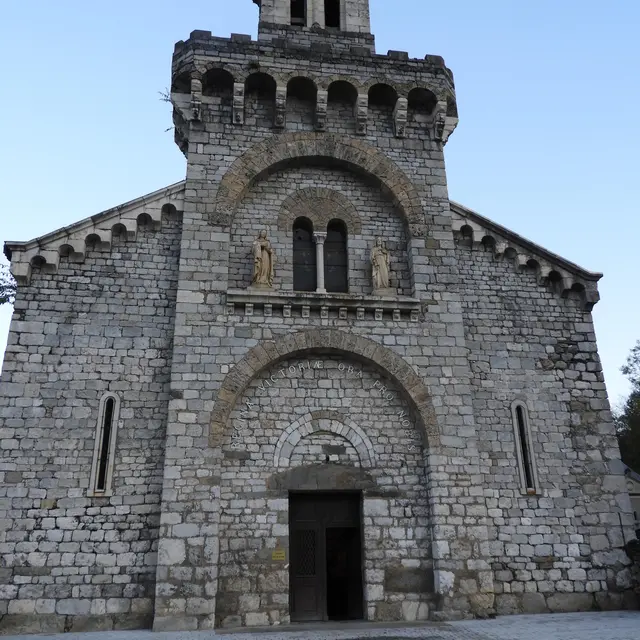
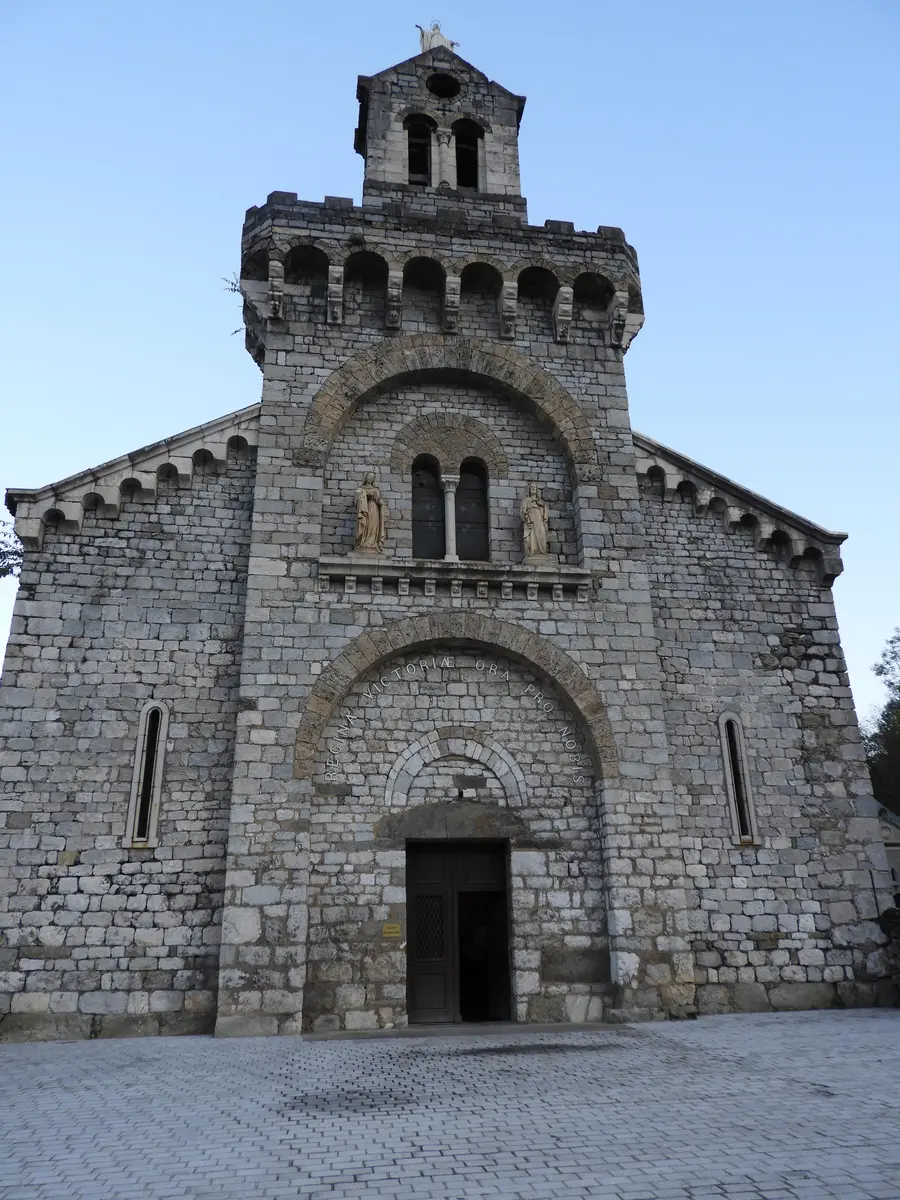
The chapel is a Romanesque church rebuilt in 1104 on the site of a Carolingian church partly destroyed in 865. Three naves, two apses and an apse make up the building, which appears to be built on an ancient plan: square pillars, no columns or sculptures, square doors, etc. The façade features a few 11th-century granite stones, the rest of the facade-belfry copy dates from 1842 and the crenellated keep from 1870. This church has been served many times, and its proximity to the Sabart cave, inhabited by counterfeiters around 1200, was used as a prison in 1345, burnt down in 1568, and was a den of brigands until 1624. It didn't gain its letters of nobility and tranquility until 1876, when it became a diocesan seminary. Based on a legend, the building and history of this church is certainly not over, and the fervor that accompanies the Notre-Dame pilgrimage on September 8 is matched by historical and archaeological research (14th-century wooden statue of the Virgin and 13th-century stained glass fragments). Like many buildings of this type, protecting and enhancing them requires considerable financial effort: a safeguarding association has been set up and, with the support of the Fondation du Patrimoine, is managing the smooth running of this project.
Rates
Free access.
—
Openings
All year 2026 - Open everyday
Location
Plan interactif : 1 lieux répertoriés.
- Lieu sans nom
Contact Notre-Dame-de-Sabart chapel
Spoken languages
Spoken languages

Environment
Environment
- 10 - 20 min walk from train station
- Less than 10 minutes from a train station by car
- Less than 10 minutes from a train station by bike
- Less than 10 minutes from an SNCF train station by electric bike
- 10 - 20 min walk to bus stop